AI Document Scanning for Car Rental Onboarding
A private AI scanner built into a large car rental platform — staff upload an ID or driving licence and the customer form fills itself in seconds, with deep support for Gulf and Egyptian documents.
Swipe or select a preview
Overview
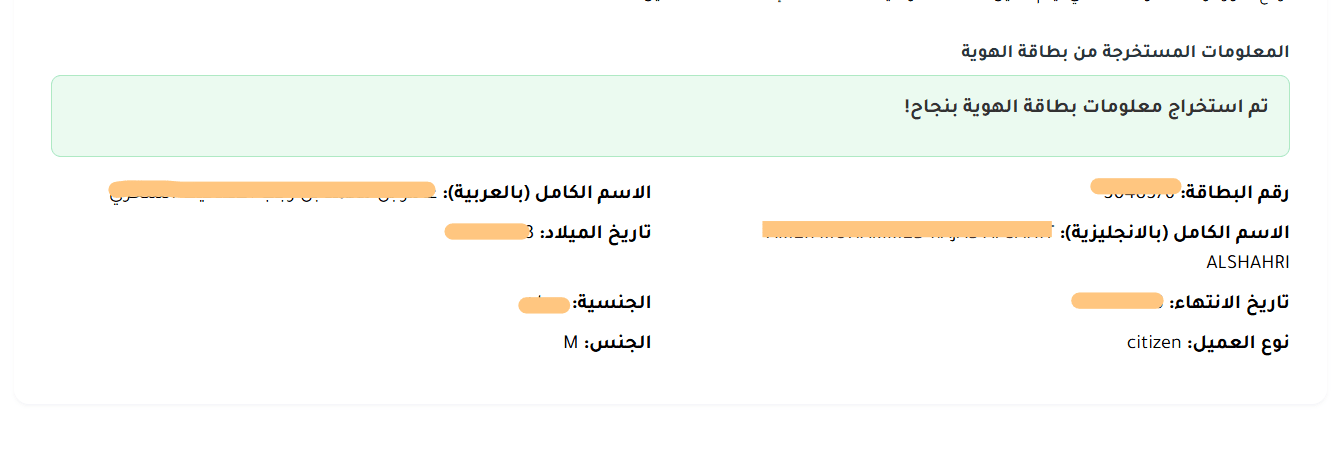
Renting a car starts with paperwork. A staff member reads an ID card, types a long number, retypes a name in Arabic, checks an expiry date, then repeats the whole thing for the driving licence — while the customer waits at the counter. It is slow, and one mistyped digit follows that booking all the way into the signed contract. I built a document scanning capability into a large car rental platform that removes this step. Staff upload a photo — front and back together, or a PDF straight from a scanner — and the customer form fills itself: card number, full name in Arabic and English, date of birth, expiry, nationality, place of issue, and the full licence details. Minutes of typing become a few seconds of review. Two things set it apart. Nothing leaves the building. Identity documents are the most sensitive data a rental business holds, and most scanning tools send them to a third-party AI service to be processed on someone else's infrastructure. This one does not. Every document is read on the company's own servers — no external AI provider, no third party in the chain. And it genuinely understands the region. Most document readers are built for Western passports and treat Arabic as an afterthought. This was built for the Gulf and Egypt from the start — Oman, Saudi Arabia, the UAE, Qatar, Kuwait, Bahrain and Egypt — reading Arabic and English side by side and handling the national quirks that generic tools get wrong. It also tells an ID card apart from a driving licence, keeps them as separate records, links them to the same customer when the evidence supports it, and asks for a human check when it does not.
About the Project
A private AI scanner built into a large car rental platform — staff upload an ID or driving licence and the customer form fills itself in seconds, with deep support for Gulf and Egyptian documents.
Tech Stack
Challenges
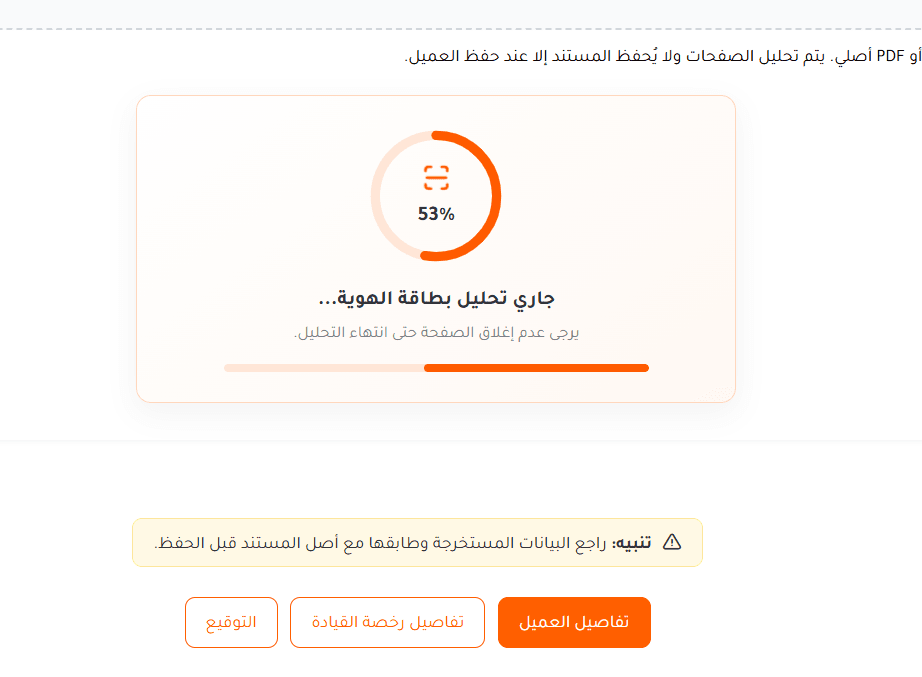
The hard part was never reading the text — it was knowing when to trust it. A wrong digit in a licence number doesn't just look untidy; it flows straight into a signed contract. So the rule became: never present a confident wrong answer. Every field carries its own confidence level. Where the document offers a way to mathematically prove a value, the system verifies it. Where it doesn't, it says so and flags the field for review. When two parts of a document disagree, it stops instead of guessing. Arabic added its own traps — names, numerals and layout all behave differently, and some faults only appeared on genuine cards, including numbers being read back to front in a way that looked completely convincing on screen. Then there were real photos: glare, tilt, shadows, messaging-app compression, cards sitting small on a full scanned page. The system grades each image first and either enhances it, works with it, or asks for a better one. The last piece was trust in the workflow. The system prepares the data; the staff member always reviews and approves before anything is saved
Results & Impact
Customer registration went from minutes of typing to seconds of review. Tested against real IDs and driving licences from all seven markets, it extracted 42 of 45 checked fields correctly — with zero incorrect values. The three misses were images too cropped to read, and it reported them as unreadable rather than guessing. • One upload handles both sides of a card, multi-page PDFs, and an ID and licence together — separated and routed automatically • Arabic and English pulled from the same document in a single pass • Every field arrives with a confidence level, so staff check the few uncertain values instead of re-reading all of them • Customer documents stopped leaving company infrastructure entirely — the third-party processor was removed from the most sensitive data path in the business • A foundation the company can extend to contracts and invoices without changing providers